Reading PA Off Road Experts
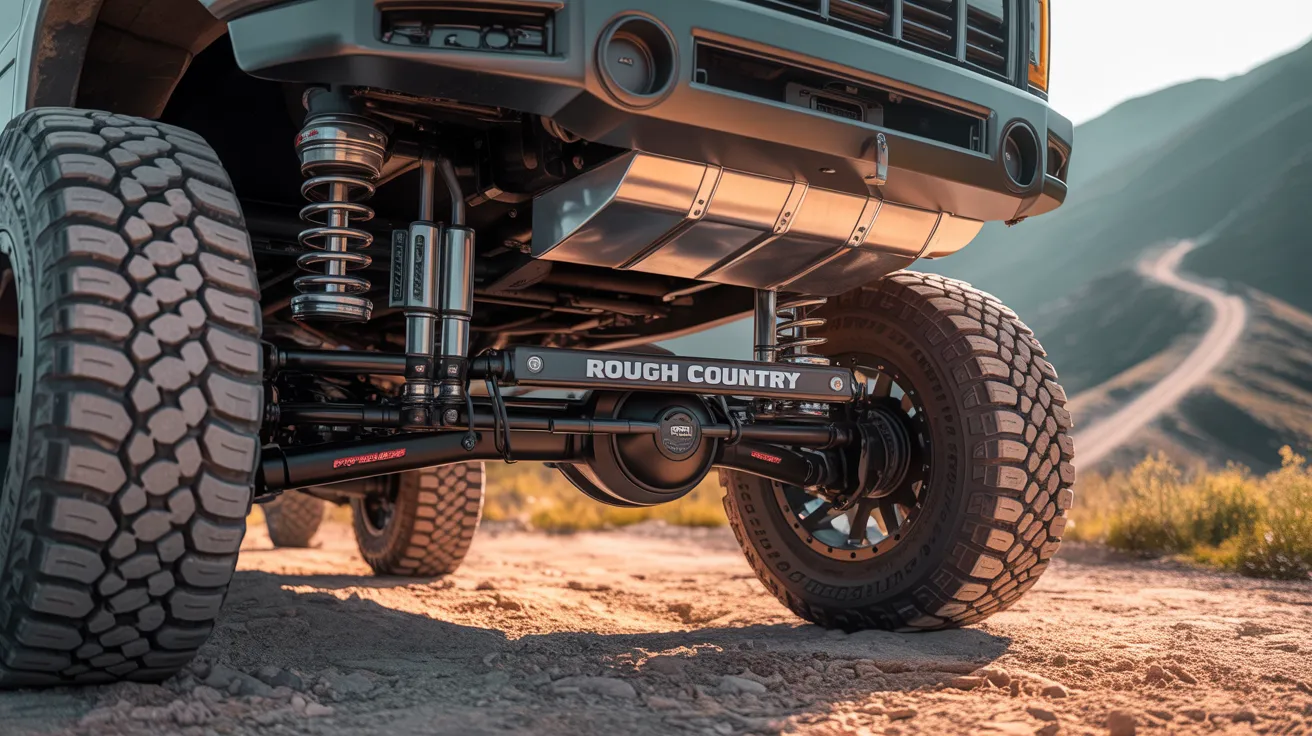
When shopping for lift kits and truck accessories in Reading, begin by determining if you need a leveling kit or a complete suspension lift. A leveling upgrade corrects factory rake while maintaining daily handling, whereas a suspension lift system offers clearance, wheel travel, and room for larger tires. You'll need precise year, trim, drivetrain, and suspension specifications to confirm Rough Country compatibility. Budget for tires, alignment, and add-ons such as steps, lights, or liners—you'll understand how the proper setup comes together
Essential Information
- Select a leveling kit to eliminate factory rake while preserving near-stock performance and fitting bigger tires for daily commuting.
- Select a suspension lift to gain more ground clearance, wheel travel, and off-road capability, knowing that steering and handling may change.
- Verify exact fitment using your truck's year, make, model, drivetrain, trim, cab, bed, and suspension package before ordering Rough Country components.
- Match lift height and shock absorbers to your use, whether commuting, mixed trail driving, towing, or heavier off-road travel.
- Plan your budget for more than the kit cost, accounting for alignment, labor, wheels, tires, shocks, and additional accessories such as steps, lights, and liners.
Suspension Lifts versus Leveling Kits
Although both modifications change your truck's stance, suspension lift kits and leveling kits handle distinct issues and deliver varying outcomes. A leveling solution typically raises the front to align with the rear, fixing factory rake with little alteration to geometry, ride height, and daily drivability. You choose one when you want a cleaner appearance and room for slightly larger tires.
A suspension lift kit raises the whole truck and modifies critical parts to create more clearance and wheel travel. You'll notice bigger gains in ride height, off-road performance, and tire options, but you should expect handling tradeoffs, steering changes, and a higher center of gravity. If you want subtle visual improvement, use a leveling kit. If you require true clearance and articulation, use a suspension lift and design the supporting modifications based on your needs.
Which Rough Country lift kit suits your truck?
Kick off by recording your truck's year, manufacturer, and model, powertrain, and planned use, as Rough Country builds lift kits for specific platform requirements and capability targets. This baseline reveals which mounting hardware and suspension pieces can bolt on without clearance or alignment issues.
Start by examining factory ride height, cab layout and cargo bed configuration, axle configuration, and if your truck runs 2WD, 4WD, or adaptive suspension. Rough Country fitment guides streamline this verification, but you must verify fitment accuracy against configuration-specific components and OEM package differences. A kit engineered for a Silverado 1500 doesn't fit a Trail Boss, and a Ram with air-spring suspension needs different adjustments rather than a coil-spring equipped truck. Once you verify fitment first, you prevent installation issues, compatibility issues, and returns.
What Rough Country lift kit works best your driving habits?
Select the kit with your actual driving habits, and you'll achieve better ride quality, lasting performance, and additional tire clearance without purchasing unnecessary capability. When your truck mainly commutes, select a light leveling kit from Rough Country or a 2- to 3.5-inch suspension setup designed for commuting comfort and predictable steering behavior.
When you divide time between road and off-road use, step up to a suspension system equipped with high-quality shocks and corrected control arm angles. You'll experience stronger off road handling, improved articulation, and capacity for bigger tires without taxing OEM components. For extensive off-road use, select lifted struts, N3 and Vertex dampers, and suspension systems that preserve driveline geometry under load. A quality Rough Country package must match load capacity, speed, and terrain, and how firm a ride you can accept.
Premium Rough Country Truck Accessories
Complete your lift setup including Rough Country aftermarket items that solve the actual issues you'll see once you lift it and add bigger tires. Focus on upgraded steps or rock sliders, which regain cabin access and deliver undercarriage protection now that your truck sits higher and broader.
focus
What Budget Should You Plan for Your Build?
After selecting the lift kit and added components, allocate a budget beyond the headline kit price. You'll need money for shock units, wheel sets, tires, professional guide alignment work, labor, and any drivetrain or steering corrections your platform requires. Brand reputation matters; quality kits typically deliver stricter specs, smoother rides, and easier installations.
In terms of practical budget estimates, assume entry-level spacer or leveling systems to begin at lower costs, while full suspension setups with control arms, adjusted dampers, and larger wheels climb quickly. Install difficulty, shop rates, and calibration work may contribute significantly. You must also budget supplementary upgrades including gear changes, brake systems, and recovery equipment if you're building for trail use. When finances are limited, compare financing options cautiously and stress durability instead of fancy additions.
Questions You Might Have
Do Lift Kits Impact Factory Warranty?
Yes, lift kits can impact your manufacturer's warranty, but they don't automatically void it. You experience warranty concerns should the dealership shows the lift kit resulted in or contributed to a defect. Engine, steering, suspension, and drive system disputes often trigger dealer disagreements. You must maintain installation records, purchase quality parts, and follow service intervals. This allows you to dispute denied claims and maintain coverage where the modification didn't contribute.
Do Larger Tires Require Re-Gearing My Truck?
Yes—if you jump multiple tire sizes, you'll often need re-gearing. For example, when you move from 31s to 35s, your vehicle may feel slow, hunt for gears, and build drivetrain stress when carrying weight. Re-gearing restores effective gear ratios, enabling you to recover acceleration, towing power, and transmission response. You may skip regearing for modest tire increases, but if performance, fuel mileage, or gear shifting decline, it's usually the right call.
How Often Should Lift Kit Components Be Inspected?
You must examine lift kit components once 500 miles are reached, then at every oil change or 3,000 to 5,000 miles, depending on your driving habits. Periodic inspections help you catch bushing wear, shock leaks, bracket damage, and alignment issues early. Test bolt tension post-rough terrain, towing situations, or impact events. If you drive in mud, salt, or rough terrain often, shorten intervals and inspect steering and suspension parts more frequently.
Can a suspension kit modify your truck's towing and payload performance?
Yes, a suspension lift can modify your truck's towing and payload limits. When you increase ground clearance for additional dirt clearance, you shift suspension alignment, weight balance, and force distribution on parts. That can reduce stability when loaded and add drivetrain strain, especially with larger tires. You should follow your manufacturer's ratings unless an quality-engineered kit specifically documents revised capacities. Correct alignment, gearing, and braking function count as well.
Is alignment work essential after you install truck upgrades?
Yes—if components alter ride elevation, suspension configuration, steering angles, or tire width, you need an alignment. You'll feel the theory right away: slight changes can pull your truck off-center, scrub tread, and compromise handling. A proper wheel alignment restores camber setting, caster, and toe setting to standard. After certain installs, you could also benefit from brake calibration for driver aid precision. You protect tire life, steering precision, and real-world safety by checking alignment immediately.
Final Thoughts
Choosing the proper lift configuration and products relies on how you use your truck, what stance you want, and what your budget can handle. When you tune a Rough Country suspension to your driving approach, you'll experience performance, clearance, and looks that integrate seamlessly like a perfectly balanced engine. Integrate smart accessories, structure your spending carefully, and you'll build a truck remaining practical on the road, capable off it, and equipped for anything next.